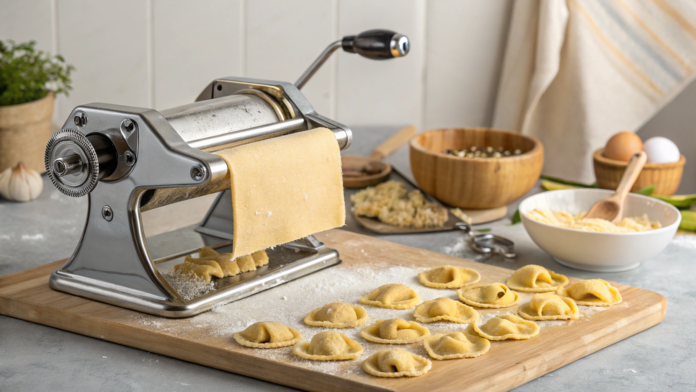
A tortellinatrice is a special machine made to produce tortellini quickly and accurately while keeping the traditional shape and taste.
Tortellini are small, ring-shaped pasta often filled with meat, cheese, or vegetables, and making them by hand takes a lot of time.
This machine helps restaurants and food businesses create tortellini in large amounts without losing quality. Overall, it makes production easier, faster, and more consistent.
This machine helps kitchens and food businesses produce tortellini in large numbers without losing quality. It is useful for both small restaurants and big food factories.
With a tortellinatrice, the dough is rolled, filled, folded, and sealed in a smooth process. Overall, it makes tortellini production easier, faster, and more consistent.
What Is a Tortellinatrice?
A tortellinatrice is a pasta-making machine specifically built to shape, fill, and close tortellini. Unlike general pasta machines, it focuses on the precise folding and sealing required for tortellini. The machine forms the dough, inserts the filling, and creates the classic ring shape. This ensures uniformity and reduces manual labor. Tortellinatrici are used in small kitchens, restaurants, and industrial food facilities.
The Origin of the Tortellinatrice
The tortellinatrice developed as a response to growing demand for tortellini beyond home kitchens. As restaurants and food businesses expanded, hand-making every piece became impractical. Italian engineers and pasta makers collaborated to design machines that could respect tradition while increasing output. Over time, these machines evolved with better materials and improved mechanics. Today, the tortellinatrice represents a blend of heritage and innovation.
How a Tortellinatrice Works?
A tortellinatrice typically starts by feeding pasta dough into rollers that flatten it evenly. The filling is then added in measured portions. The machine folds the dough around the filling and seals it securely. Finally, it shapes the pasta into the familiar tortellini form. This process happens smoothly and repeatedly, allowing for consistent results.
Key Components of a Tortellinatrice
The main components include dough rollers, filling dispensers, shaping molds, and sealing mechanisms. Some machines also include cutting blades to separate each piece. Modern tortellinatrici may have adjustable settings for size and filling quantity. These components work together to ensure precision and hygiene. Quality materials help maintain durability and food safety.
Types of Tortellinatrice Machines
There are manual, semi-automatic, and fully automatic tortellinatrici. Manual machines require more operator involvement and are often used by small kitchens. Semi-automatic machines balance control and speed. Fully automatic machines are designed for large-scale production. Each type serves different needs and budgets.
Tortellinatrice for Home and Small Kitchens
Smaller tortellinatrici are suitable for home cooks and artisan producers. These machines focus on simplicity and ease of use. They allow users to experiment with fillings and dough types. While production volume is lower, quality remains high. This makes them ideal for specialty pasta makers.
Tortellinatrice in Restaurants
Restaurants use tortellinatrici to save time while maintaining consistent quality. Fresh tortellini can be produced daily with less effort. This ensures menu reliability and customer satisfaction. Chefs can focus on sauces and presentation. The machine supports both creativity and efficiency.
Tortellinatrice in Industrial Production
In industrial settings, tortellinatrici are built for speed and durability. They can produce large quantities in a short time. Automated systems reduce labor costs and minimize errors. These machines follow strict hygiene standards. Industrial tortellinatrici support mass distribution while keeping uniform quality.
Benefits of Using a Tortellinatrice
The biggest benefit is consistency in size, shape, and filling. Time savings are significant compared to hand production. Labor effort is reduced, lowering fatigue. Waste is minimized through precise portioning. Overall productivity increases without compromising taste.
Quality and Tradition
Some worry that machines reduce authenticity, but a good tortellinatrice preserves traditional characteristics. Dough texture and filling balance remain intact. Skilled operators can fine-tune settings. This ensures the final product respects culinary heritage. Tradition and technology can work together.
Customization and Flexibility
Many tortellinatrici allow customization of size and filling type. This supports creativity and menu variety. Users can switch between classic and modern recipes. Flexibility helps businesses adapt to customer preferences. This versatility adds value to the machine.
Maintenance and Cleaning
Proper maintenance is essential for performance and hygiene. Regular cleaning prevents dough buildup and contamination. Parts should be checked for wear. Simple maintenance routines extend machine life. Clean machines produce better pasta consistently.
Choosing the Right Tortellinatrice
Choosing depends on production needs, space, and budget. Small kitchens may prefer compact models. Large producers need high-capacity machines. Ease of use and cleaning are important factors. A well-chosen machine supports long-term success.
Training and Skill Development
Operators need basic training to use a tortellinatrice effectively. Understanding settings and maintenance improves results. Training ensures consistency and safety. Over time, operators gain confidence. Skilled use enhances product quality.
Conclusion
A tortellinatrice is a useful tool for making tortellini faster and with consistent quality.
It helps businesses save time and reduce waste while keeping the traditional taste.
This machine supports both small kitchens and large food producers in meeting demand. Overall, it makes pasta production more efficient and reliable.
Frequently Asked Questions
1. What is a tortellinatrice?
A tortellinatrice is a machine designed to shape, fill, and seal tortellini efficiently.
It ensures consistent size and quality in pasta production.
2. Is a tortellinatrice suitable for home use?
Yes, smaller models are suitable for home or artisan kitchens.
They offer quality results with manageable output.
3. Does a tortellinatrice replace handmade tortellini?
It does not replace tradition but supports it with efficiency.
Quality and authenticity can still be maintained.
4. How difficult is it to operate a tortellinatrice?
Basic training is enough for most machines.
Operation becomes easier with practice.
5. Can fillings be customized?
Yes, many machines allow different fillings.
This supports recipe creativity and variety.
6. How often should a tortellinatrice be cleaned?
Cleaning should be done after each use.
This ensures hygiene and smooth operation.
7. Are tortellinatrici expensive?
Prices vary depending on size and features.
They often provide good long-term value.
8. Is a tortellinatrice safe to use?
Modern machines include safety features.
Proper training ensures safe operation.
9. Can a tortellinatrice be used in restaurants?
Yes, it is widely used in restaurant kitchens.
It supports fresh pasta production daily.
10. What is the main benefit of a tortellinatrice?
The main benefit is consistent, efficient tortellini production.
It saves time while preserving quality.